



Gambia Clean Energy Roundtable
2 members
Loading...
Climate Live South Africa
6 members
Loading...
Gambia Clean Energy Roundtable
2 members
Climate Live South Africa
6 members


Is decluttering the secret to sustainable fashion?
•••
We often think of sustainability as buying from eco-friendly brands, but it actually starts with managing what we already own. As the founder of Trashion Kenya I pointed out, how decluttering enhances you to change your consumption habits. When you realize how many unworn clothes you have, you naturally become more mindful about your next purchase.
Instead of throwing items away, true sustainability lies in finding new homes for them whether that means gifting them to family or donating them to organizations that will repurpose them.
How often do you declutter your wardrobe? #decluttering #sustainablefashion #circularfashion
Are we completely misunderstanding the concept of sustainable fashion?
The immediate reaction to building an eco-friendly wardrobe is often to go out and buy a brand new outfit from a "Sustainable" brand. However, as Habiba Abdulrahman explains, acquiring more items fundamentally contradicts the goal of reducing global waste. The absolute best sustainable outfit you can wear is the one already sitting in your closet.
True environmental responsibility requires us to embrace upcycling, renting, and restyling before we ever consider a new purchase.
When was the last time you repurposed an old piece of clothing?
#sustainablefashion #circularfashion #fastfashion
This year I was Truly inspired at #ADSW in Abu Dhabi my highlight was the beautiful opening ceremony of the Zayed Sustainability Prize, which celebrated the 2026 Global Changemakers, where US$5.9M was awarded to 11 organizations and high schools from the UAE, Brazil, Canada, Nepal, Switzerland, and Uganda.
Recognizing their innovations that have positively impacted over 400 million lives across six sustainability categories; including health, food, water, climate action, and global high schools. The ceremony set the tone for Abu Dhabi Sustainability Week under the theme "The Nexus of Next: All Systems Go" where ambition meets action, innovation connects with people, and global collaboration drives real impact. The next Global Changemaker could be YOU. Are you ready to make an impact?
Honoured to attend the 12th Conference of the Parties to the Nairobi Convention in Dar es Salaam, bringing together voices committed to protecting our oceans, strengthening climate resilience, and advancing a sustainable Blue Economy across the Western Indian Ocean.
A powerful reminder that healthy oceans mean healthy communities, livelihoods and a sustainable future. 🌍💙
Grateful for the conversations, connections and learning—and especially for the opportunity to engage in spaces where youth voices and meaningful partnerships can shape the future.
#COP12 #NairobiConvention #BlueEconomy #OceanConservation #ClimateAction #YouthForClimate #DarEsSalaam
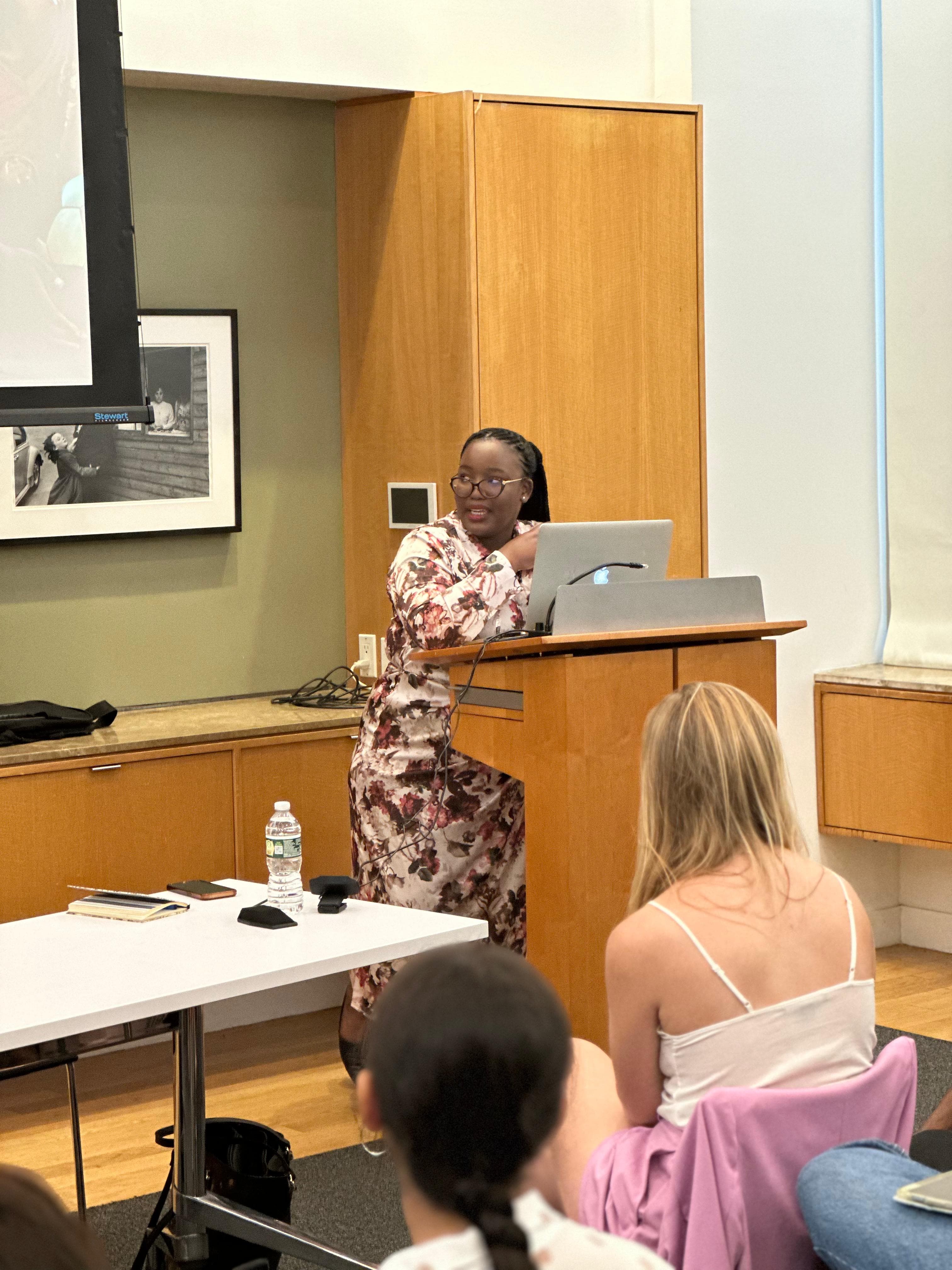
I spent a few days in Kigali earlier this month for the Africa Food Systems Forum, and one thing I kept thinking about throughout the week was just how interconnected all of these conversations are.
We speak about climate change, food security, agriculture, trade and economic development as though they are separate policy areas, but in practice they really are not.
For many African countries, agriculture is a source of food, jobs, income and exports. So when climate shocks affect production, the consequences do not end on the farm. They affect food prices, household incomes, businesses and ultimately our economies.
What I appreciated about being at the Forum was hearing these conversations from different sides. You had farmers and businesses speaking about the realities of producing and getting products to market, alongside governments and development institutions thinking about policy, financing and the bigger systems around them.
It also made me think about trade, which is naturally where my mind tends to go. We can produce more sustainably, but we also need to think about what happens after production. Can farmers access markets? Can products move efficiently across borders? Are we processing enough of what we produce locally? And are our regional markets resilient enough when climate shocks disrupt production in one part of the continent?
I came away from Kigali with more questions than answers, but perhaps that is a good thing.
For me, the biggest takeaway was that Africa’s climate transition has to make sense within the realities of African economies. We need climate-resilient food systems, but we also need jobs, productive economies, stronger regional value chains and greater intra-African trade.
The challenge is figuring out how we build all of those things together.
A really insightful few days in Kigali, and definitely a conversation I want to keep learning from. 🌱🇷🇼

DC Fast Charger installed in Dar Es Salaam POSTA ! Drive Electric with WAGA Motion

Looking for a co-founder to work on COOLROOF, a roofing system that keeps your home cool with zero need of electricity.
